UCL × IBM / Second Year, Final Term Industrial Project
DR HEX
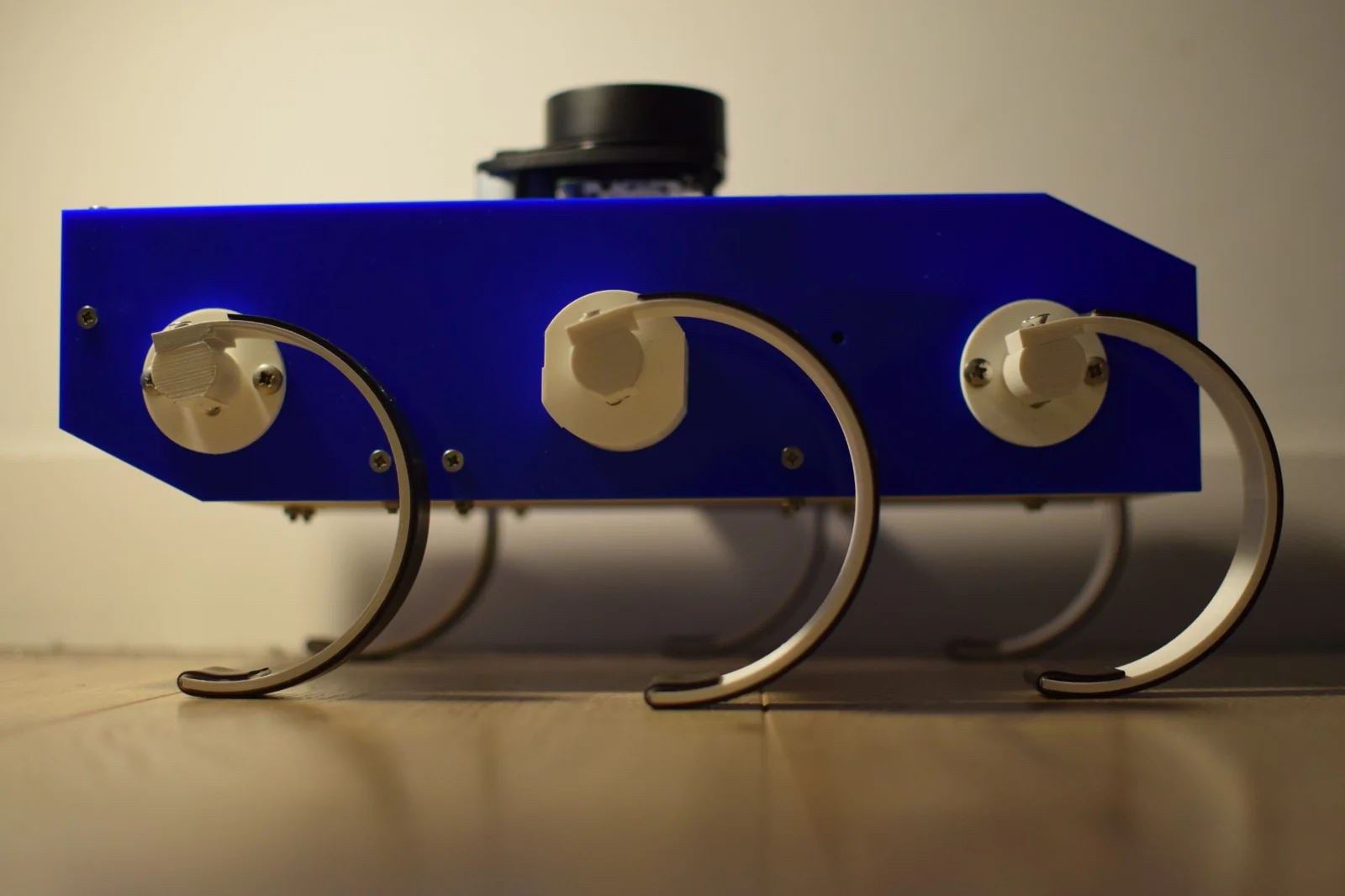
A six-legged prototype exploring how robots could help responders reach people in unsafe environments.
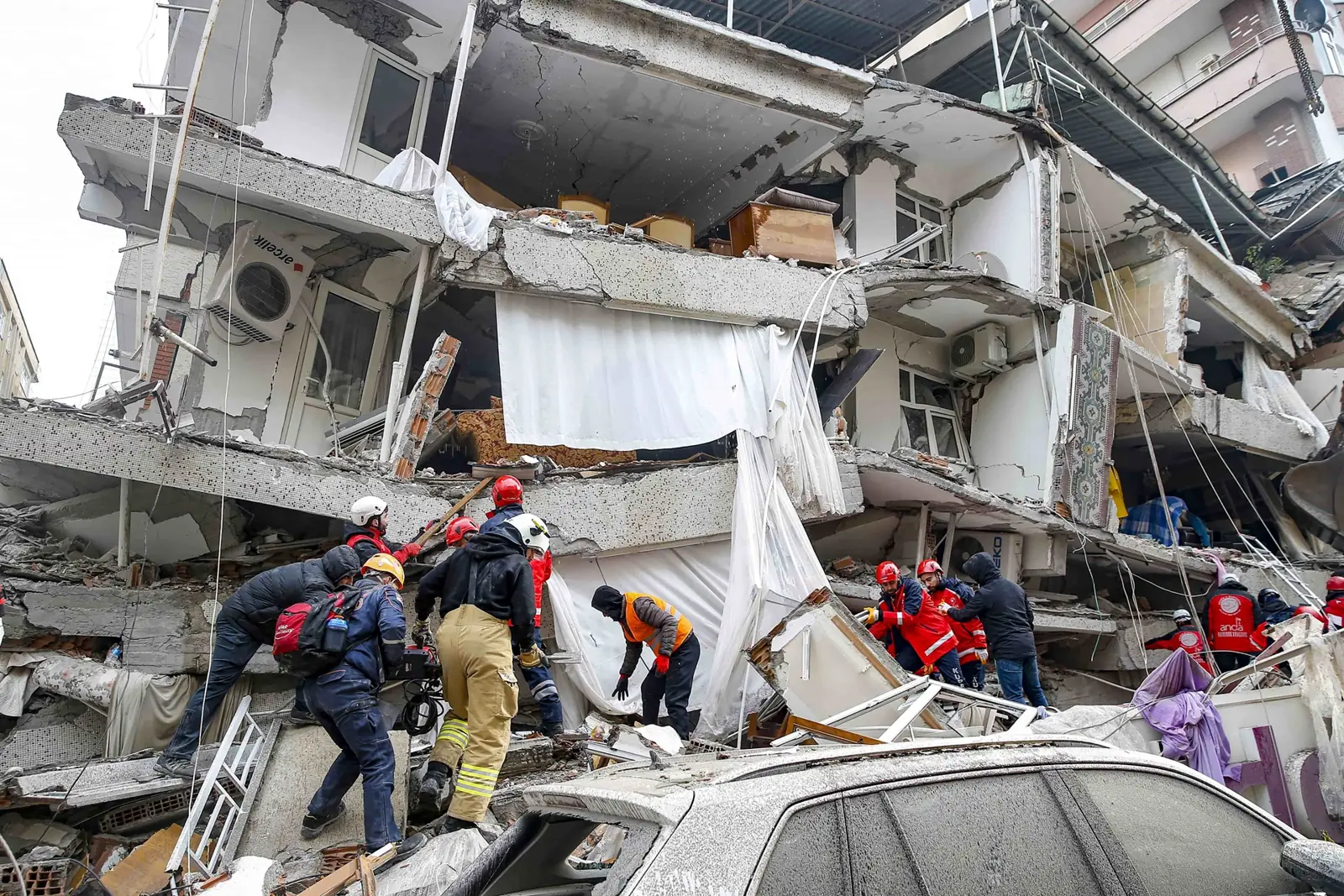
In the aftermath of an earthquake,
every second counts.
The first 72 hours are critical for saving lives.
02 / Making the idea work
A system built through iteration.
As part of a UCL industrial project with IBM, our four-person team had five weeks to turn the disaster-response concept into a working prototype. I led the design and mechanical work and acted as the main IBM liaison, connecting decisions in CAD and the workshop with weekly stakeholder updates.
Give the robot a body.
I led the final CAD, mechanical configuration and assembly, adapting an RHex-inspired architecture to our resources. Printed parts and PVC reinforcement helped us balance compliance with the structural support the chassis needed.
Find a workable gait.
I developed the compliant legs through material and infill experiments, then engineered and tuned a tripod gait. The challenge was to make the physical design and motion work together on a platform we could actually build.
Connect movement to purpose.
I collaborated on SLAM and thermal-detection integration and testing. The wider team also explored voice-based triage with watsonx.ai and watsonx.data, linking the robot concept to survivor communication and reporting.
03 / From reference to demonstration
The build, frame by frame.
Follow the design decisions, assembled hardware and controlled test setup. Select a photograph to see it in detail.
01 / 06
04 / The result
An integrated prototype.
We built and demonstrated a robotic platform combining locomotion, sensing and a voice-based triage concept. I presented the final system to IBM’s Worldwide Academic Ambassador Community, explaining both the engineering work and the purpose behind it.
What the demonstration showed.
The project brought the different parts of the concept together within a short university build. It was a prototype demonstration, with surface-level watsonx integration, rather than a validated disaster-response product. We did not establish quantified field performance.
For me, the project was an exercise in making mechanical decisions serve a wider system, and communicating those decisions as the build evolved.